
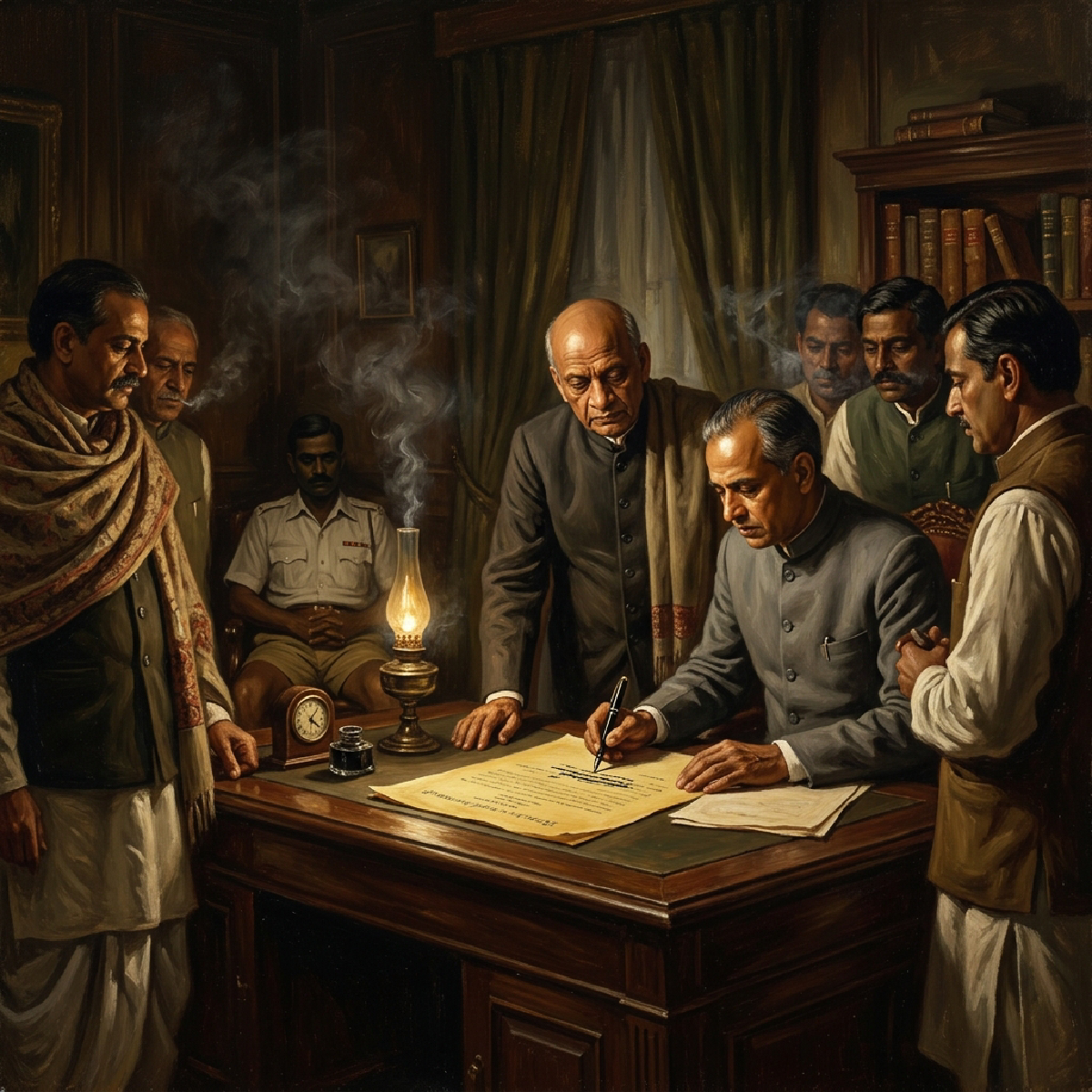

The health of a democracy is often measured by the vibrancy of its public debates and the integrity of its electoral mandates. However, a deeper analysis of India’s legislative framework reveals structural mechanisms that actively undermine individual representative accountability and facilitate institutional capture.
Two specific instances—the enforcement of the Anti-Defection Law (10th Schedule) and the 2016 retroactive amendment to the Foreign Contribution (Regulation) Act (FCRA)—serve as critical case studies in how parliamentary sovereignty is often superseded by centralized party control and private interests.
The Tyranny of the Whip: The Death of the Individual Representative#
The 10th Schedule of the Indian Constitution, commonly known as the Anti-Defection Law, was originally intended to prevent political opportunism and ensure government stability. In practice, however, it has fundamentally altered the relationship between an MP and their constituency.
The Confiscation of Conscience#
The law mandates that an elected representative must vote according to the “Whip” issued by their party leadership. Failure to do so results in immediate disqualification. While this prevents “floor-crossing,” it effectively strips the individual lawmaker of their right to represent local interests or vote according to their conscience.
In a functioning representative democracy, a lawmaker from a drought-stricken region should be able to vote against their party’s industrial policy if it harms their constituents. Under the 10th Schedule, that lawmaker is no longer a representative; they are a proxy for the party’s “High Command.” This centralization turns Parliament into a theater of predetermined outcomes, where debates are symbolic and the individual voice is legally silenced.
Legislative Capture: The 2016 FCRA Betrayal#
While the 10th Schedule centralizes power, the 2016 amendment to the FCRA demonstrates how that power can be used to sanitize illegalities and protect institutional interests across partisan lines.
Redefining the Rulebook#
In 2014, the Delhi High Court found both the ruling party and the primary opposition guilty of illegally accepting foreign contributions from corporate entities (notably the mining conglomerate Vedanta). Rather than facing judicial consequences, the two parties collaborated to amend the FCRA through the 2016 Finance Bill.
The amendment achieved two things:
- It redefined the term “foreign company” to retroactively exclude certain corporate structures, effectively legalizing the contributions in question.
- It was made retroactive to 2010, sanitizing years of illegal political funding in a single legislative stroke.
The Illusion of Opposition#
This event serves as a stark reminder that in matters of institutional self-preservation, the “ideological war” between political rivals often vanishes. When the financial and legal survival of the political class is at stake, the legislative machinery functions as a unified cartel. The ability to retroactively legalize one’s own actions is the ultimate expression of legislative capture, where the rules of accountability are selectively applied.
Conclusion: The Cost of Structural Fragility#
Institutional fragility in India is not merely a matter of corrupt individuals; it is a feature of a system that selects for obedience over conscience and prioritizes party survival over public accountability. Until the 10th Schedule is reformed to allow for dissent on non-confidence motions, and until campaign finance is transparently decoupled from corporate interest, the ballot box remains a weak tool against a deeply entrenched structural cartel.
This article is a refined analysis of institutional accountability. For the raw, visceral accounts of these betrayals written as they unfolded, you can read the original posts on my personal blog: